Newsletter Subscribe
Enter your email address below and subscribe to our newsletter
Enter your email address below and subscribe to our newsletter

 ByJohn A
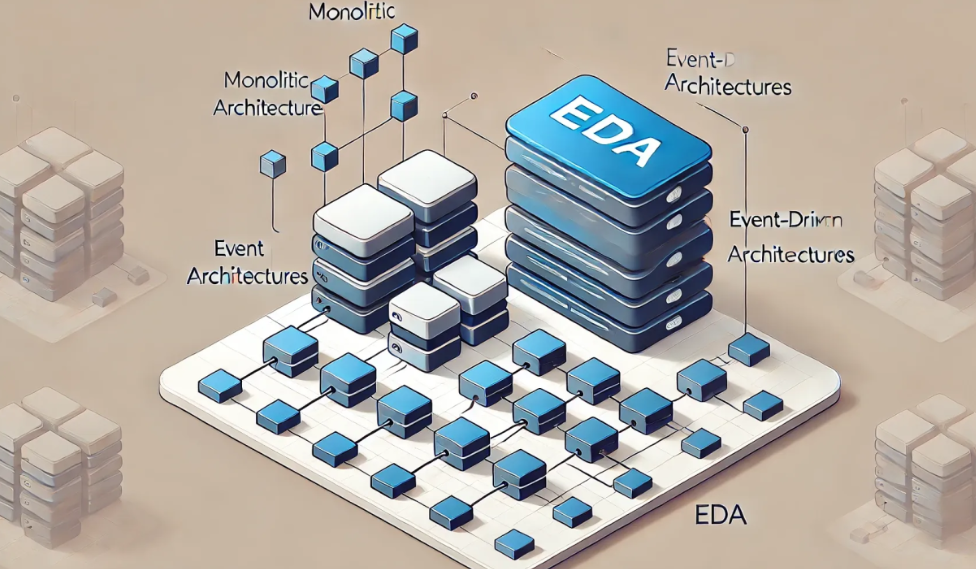
Event-driven architecture (EDA) and monoliths represent two ends of a architectural spectrum. A monolith centralizes components in one process, simplifying development but risking tight coupling and brittle deployments. EDA partitions functionality into independent services that exchange events, offering clearer data ownership and elastic scalability. The choice hinges on integration complexity, latency, observability, and governance. Transitions require careful planning, incremental migration, and solid rollback strategies. The implications are nuanced; stakeholders must weigh current needs against long-term constraints.
Event-driven systems and monolithic architectures represent two distinct approaches to building software applications. In a monolith, a single process handles all components, sharing memory and a unified data model. Event-driven designs partition functionality into services that communicate via events, improving scalability. Key considerations include event boundaries and data ownership, which delimit responsibilities and preserve autonomy within distributed components.
Signs that a monolith has outgrown its scope become evident as system complexity, deployment friction, and time-to-market pressure mount. Organizations observe tight coupling, brittle releases, and constrained scalability, signaling necessary changes. Decomposed services enable independent evolution and resilience, while explicit data ownership clarifies boundaries. The shift supports faster iteration, clearer accountability, and freedom to innovate beyond monolithic constraints.
Determining the right moment to adopt an event-driven architecture hinges on concrete signals: escalating integration complexity, frequent cross-service coordination bottlenecks, and evolving latency or availability requirements that exceed monolithic capabilities.
The evaluation framework centers on evaluating scalability across services and data flow, while assessing data consistency guarantees, failure domains, and observability.
Decision seeds: cost, risk, and the agility gained versus ongoing synchronous coupling constraints.
See also: FinOps Best Practices for Organizations
Practical migration paths for reliability begin by outlining concrete, incremental steps that balance risk, cost, and observable benefits. The approach emphasizes structured planning, measurable milestones, and early validation.
Key practices include mapping migration patterns, isolating services, and establishing reliability considerations such as monitoring, rollback capabilities, and targeted canary releases. Documentation, governance, and continuous improvement underpin enduring resilience and freedom to evolve.
The cost comparison hinges on upfront investments and ongoing maintenance; monoliths are cheaper initially but scale costs escalate, while event-driven architectures demand higher complexity and op-ex but offer superior scalability implications through modular deployment and resource efficiency.
Migration to event-driven systems risks data coupling and event storms, posing governance and reliability challenges. The architecture requires robust monitoring, clear ownership, and disciplined contracts; without these, latency, error propagation, and complexity erode freedom and control.
Observability needs differ: event-driven systems emphasize distributed tracing and asynchronous metrics, while monoliths favor centralized logs and structured dashboards; gaps arise in cross-service visibility. Observability gaps require tracing strategies addressing latency, retries, and event provenance.
Ownership boundaries should be defined by product squads and platform teams collaborating under a formal governance cadence; sponsors ensure alignment, while architecture moderators maintain decoupling, security, and interoperability, enabling autonomous teams with clear accountability and scalable, freedom-preserving decision rights.
Coincidence marks the rhythm: time to value emerges as migration accelerates, while change management governs the pace. The typical ROI timeline varies; governance, tooling, and adoption speed define it, enabling measured freedom with disciplined, structured deployment.
A horizon of microservices rises beyond the solid blocks of a monolith, like dawn stitching fractured glass into a prismatic skyline. Events become wind shaping the landscape, boundaries clear, latency localized, resilience braided into the fabric. Yet migration is a careful, measured climb: incremental, reversible, observable. When governance, tooling, and ownership align, the system breathes with elastic cadence; when misaligned, it shatters. The choice isn’t speed, but sustainable adaptability in a changing environment.